Betrayal of Faith: Why the Tamil Nadu Government’s Karur Temple Land Order Must Be Reversed
The Tamil Nadu government’s recent order lifting the registration ban on 3,084.95 acres of temple land in Karur district has sparked a firestorm of controversy. What the ruling TVK government is attempting to pass off as an administrative correction is, in reality, a calculated move to hand over temple properties worth an estimated ₹25,000 crore to private parties. This is not merely a bureaucratic decision; it is an act of treachery against Hindu temples and the millions of devotees who revere them.
The Shocking Scope of the Order
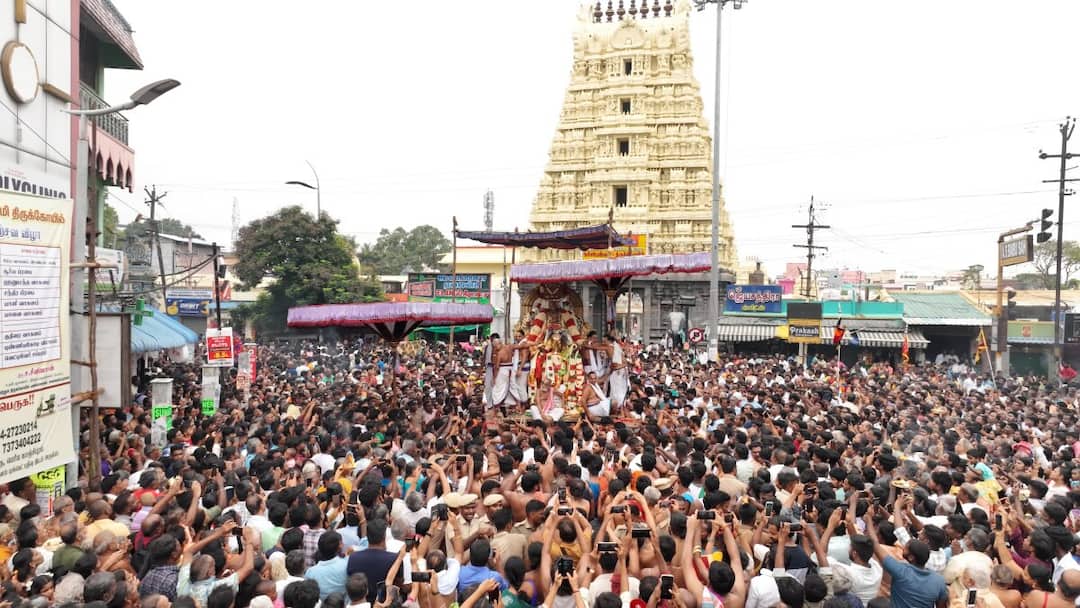
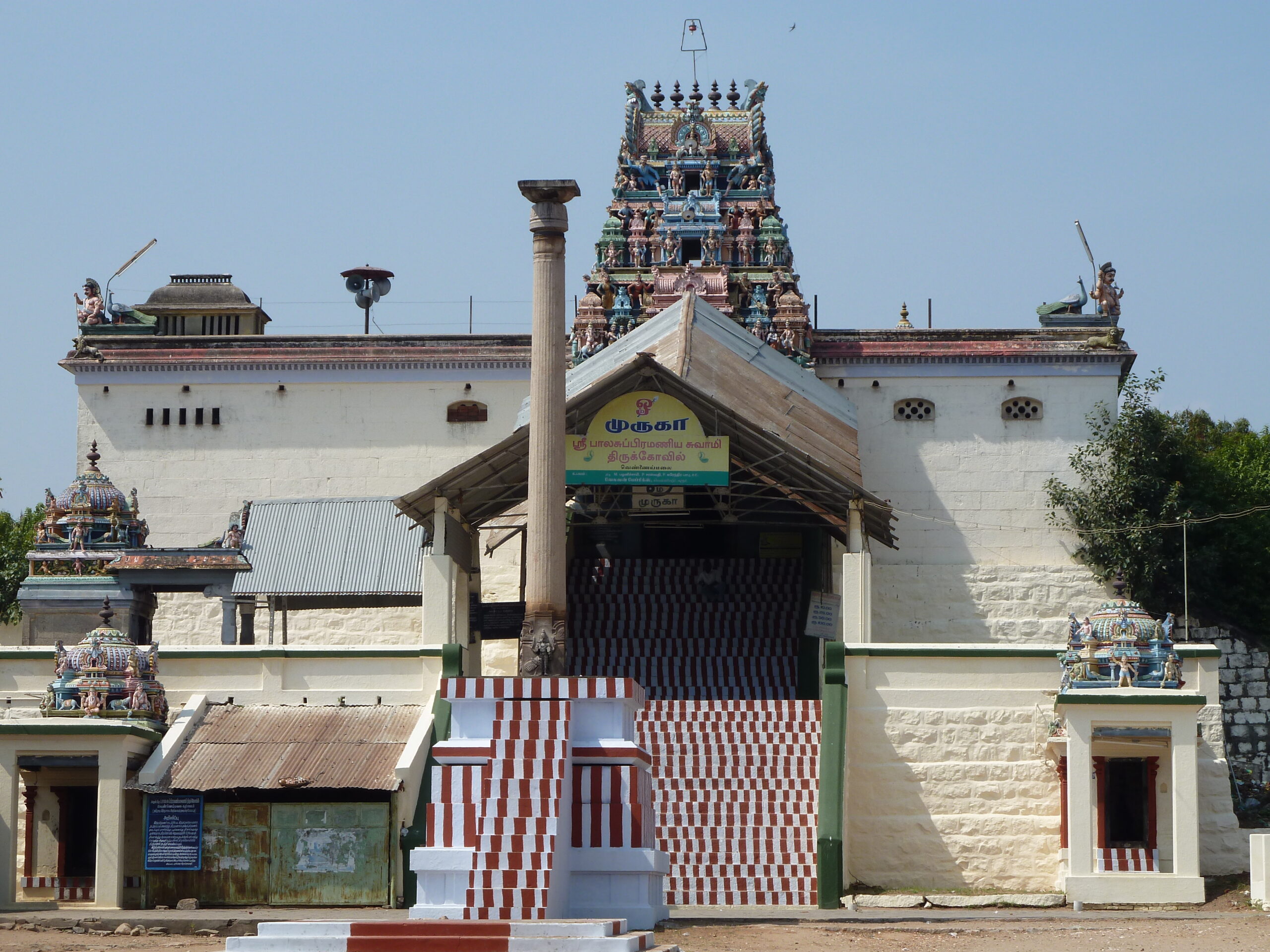
The order, issued by HR&CE Commissioner T.G. Vinay on July 9, 2026, pertains to land spread across 471 survey numbers in 15 villages, attached to four major temples: the Kalyana Pasupatheeswarar Temple in Karur (214.29 acres), the Balasubramaniya Swamy Temple at Pugalimalai (204.52 acres), the Raveeswarar Swamy Temple at Kuppuchipalayam (132.49 acres), and the Vikrutheeswarar Temple at Venjamangudalur (2,533.65 acres). What is most alarming is the speed with which this was pushed through the District Collector and HR&CE Joint Commissioner issued no-objection certificates on July 9, and the government approved the proposal and issued the order the very same day. Such haste in dealing with assets worth thousands of crores is not merely suspicious; it is scandalous.
Temple activist T.R. Ramesh, who first exposed this move on social media, rightly condemned it as a “major act of treachery against temples”. He noted that even the DMK, for all its faults, never carried out such an atrocity. Various influencers/organizations in social media have accused the government of assisting land mafias and warned of statewide protests if the order is not withdrawn.
The Government’s Flimsy Defense And Why It Fails
The government’s defense rests on the Tamil Nadu Minor Inams (Abolition and Conversion into Ryotwari) Act, 1963, claiming that these lands were legally assigned to families under that Act. Law Minister CTR Nirmal Kumar has argued that the order only removes a registration bar and does not confer title.
This argument is dangerously misleading. The HR&CE communication itself states that while applications were originally submitted in the names of temples under the 1963 Act, pattas were later issued to private individuals. The very fact that temple authorities had previously requested that these lands be placed under the Prohibitory Module demonstrates that the temple itself recognized these as its properties. Now, the government is unilaterally reversing that protection.
Moreover, the government’s claim that “no temple land has been given to anyone” is semantic gymnastics. When you lift a registration ban and facilitate the grant of pattas to occupants, you are, in effect, transferring ownership. Temple activists have rightly pointed out that the government is “regularising encroachments on temple properties”. Calling an encroacher a “pattadar” does not make the encroachment lawful.
Finally, there is a fundamental legal problem that the government has conveniently ignored. Under the 1963 Act, no ryotwari patta shall be granted in respect of any land falling under certain specified categories. Whether these lands fall within those excluded categories, and whether the pattas were validly issued in the first place, are questions that require adjudication, not unilateral executive action without notice to the temple or any judicial determination. The government cannot short-circuit this process by unilaterally declaring these lands “private” and lifting the ban without any proper inquiry.
The Hypocrisy: 500 Acres of Vennaimalai Temple Land Still Under Encroachment
Perhaps the most damning evidence of the government’s duplicity comes from the very same district. As highlighted in a viral social media post, there are 500 acres of Sri Balasubramania Temple land in Vennaimalai, Karur, that remain under chronic encroachment. Despite court orders dating back to 2019, no action has been taken by successive governments – AIADMK, DMK, or TVK.
The Madras High Court has taken an extremely serious view of this inaction. In a contempt petition hearing, Justices Velmurugan and Pugalendi made a scathing observation that cuts to the heart of the matter: “The poor deity has no voting right. On the other hand, the mighty encroachers have valuable votes. In a democratic polity, electoral arithmetic sometimes appears to influence administrative resolve. But constitutional governance is not subordinate to electoral expediency”.
The judges further noted that the encroachers are not just poor villagers they include 27 government officers, 49 industrialists, and 38 people wielding considerable influence. The court observed that “this very composition explains why the eviction proceedings were thwarted through massive protests by political leaders irrespective of party lines”.
This is the context in which the current government’s order must be understood. While powerful encroachers continue to occupy 500 acres of temple land with impunity, the government is rushing, in a single day, to legitimize the occupation of another 3,085 acres. The hypocrisy is staggering.
A Pattern of Temple Land Mismanagement
This is not an isolated incident. The HR&CE department has a long history of mismanaging temple assets. The Madras High Court has previously noted that 507.88 acres of Balasubramaniyaswamy Temple land remained under encroachment, with only 93.64 acres recovered. The court has summoned officials and found them guilty of wilful contempt for failing to evict encroachers.
Yet, instead of taking decisive action to reclaim temple properties, the TVK government is actively facilitating their transfer to private parties. This is not governance; this is governance captured by vested interests.
The Human Cost And Why It Doesn’t Justify This Order
The government has attempted to evoke sympathy by claiming that nearly 10,000 families will be affected. But sympathy cannot be a substitute for legality. If these families have been living on temple land for decades, the proper course is to regularize their status as tenants, not to transfer ownership. The temple, as a juristic person recognized by law, has rights that cannot be trampled upon for political convenience.
The government’s decision also sets a dangerous precedent. If temple land can be transferred to occupants simply because they have been there for a long time, every temple in Tamil Nadu becomes vulnerable. This is not about protecting farmers; this is about systematically dismantling the temple land base that has sustained Hindu religious institutions for centuries.
What Must Be Done
The TVK government must immediately:
- Reverse the July 9 order and restore the registration ban on all 3,084.95 acres.
- Initiate a thorough, transparent inquiry into how this order was pushed through in a single day.
- Take decisive action to evict the powerful encroachers from the 500 acres of Vennaimalai temple land, as directed by the Madras High Court.
- Implement a clear policy that distinguishes between genuine tenants and encroachers, ensuring that temple properties are protected while providing humane treatment to the landless poor.
Conclusion
The Karur temple land order is a betrayal of the Hindu faith and a violation of the constitutional mandate to protect religious institutions. The deity may not have a vote, but the Constitution speaks for it. It is time for the government to listen not to the “electoral arithmetic” of encroachers, but to the voice of justice, law, and constitutional governance.
As the Madras High Court wisely observed, constitutional governance is not subordinate to electoral expediency. The TVK government would do well to remember this before it is too late. The eyes of millions of devotees, and the vigilant scrutiny of the courts, are upon them.