
The Hormuz Warning: Why India’s Petrochemical Growth Needs Supply-Chain Resilience
“This volatility shows that attracting investment is only one part of the challenge. The larger task is to create a stable, predictable, and resilient ecosystem in which investors are confident that feedstock supply, logistics, regulation, and energy costs will remain manageable even during periods of global disruption…”
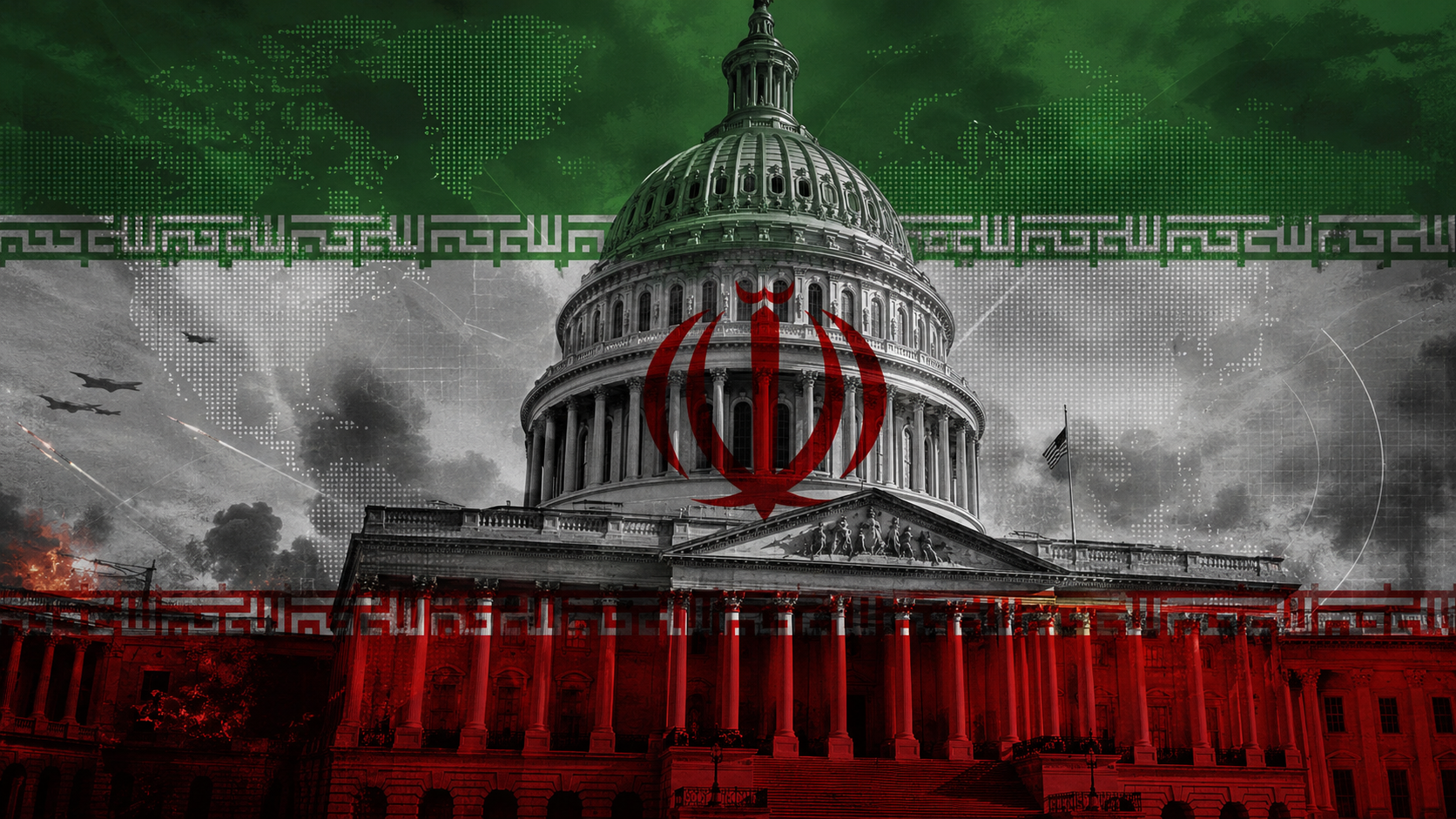
The recent Iran-US tensions and the threat of disruption in the Strait of Hormuz offered India a warning that should not be ignored. The country was able to absorb the immediate shock through diversified crude sourcing, alternative supply arrangements and government intervention. But the episode also exposed how quickly a geopolitical crisis in one maritime corridor can transmit itself into India’s energy costs, industrial inputs, supply chains and inflation.
For India’s chemicals and petrochemicals sector, this vulnerability is particularly significant. The sector is expected to be one of the major pillars of India’s industrial expansion, but much of this growth remains tied to imported energy, feedstocks and intermediates. A disruption in crude oil, LNG, LPG, naphtha, methanol or other critical inputs would not remain confined to petrochemical producers. Its effects would travel through fertilisers, pharmaceuticals, plastics, packaging, textiles, synthetic fibres, automobiles, electronics, construction materials and clean-energy supply chains.
India’s chemicals and petrochemicals sector is currently valued at approximately USD 220 billion and aims to scale up to USD 1 trillion by 2040 and over USD 1.5 trillion by 2047. As highlighted in the Economic Survey 2025–26, the sector contributed 8.1 percent to manufacturing Gross Value Added (GVA) in Financial Year 2024, directly contributing up to 6 per cent of India’s GDP and providing employment to over 5 million people.
These ambitions make the lesson from the Hormuz crisis even more important. India may have managed the immediate disruption, but the larger question is whether an industrial sector of this scale can continue expanding without deeper resilience in feedstock security, logistics, strategic reserves and domestic production. The recent crisis therefore needs to be seen not merely as an energy-market event, but as a stress test for India’s long-term industrial strategy.
The FDI Contradiction: Growth in Absolute Terms, Decline in Relative Share
This sector, while a key engine of economic growth, is simultaneously shaped by three interlinked dynamics: volatile yet growing foreign direct investment, a steadily increasing dependence on imports, and heightened exposure to geopolitical disruptions, particularly in critical supply routes like the Strait of Hormuz.
By combining long-term investment and import trends with the immediate realities of global conflict and energy insecurity, the discussion highlights a central contradiction: the CPC sector is expanding faster than the broader economy, yet its structural vulnerabilities are deepening.
FDI has played a significant role in shaping the sector’s expansion. In India’s chemical sector, FDI has historically been marked by sharp volatility, reflecting its sensitivity to global and domestic forces. The sector has witnessed dramatic surges, exceeding 200% in 2013–14 and around 90% in 2021–22, followed by equally steep declines, including a contraction of over 50% in 2022–23. These fluctuations are largely driven by shifts in global commodity prices, evolving regulatory frameworks, and changes in government policies that influence investor sentiment and project viability.
In contrast, overall FDI inflows into India have followed a much steadier upward trajectory, rising from $22.4 billion in 2012–13 to over $50 billion by 2023–24, indicating broader macroeconomic stability. Despite its volatility, the chemical sector has demonstrated strong long-term growth in absolute terms, with FDI increasing from $292 million in 2012–13 to approximately $1,060 million in 2023–24, as reported by the Department of Chemicals and Petrochemicals (as of March 31, 2025). This divergence shows the sector’s potential, while also highlighting its vulnerability to external shocks and policy shifts.
The decline in FDI in the CPC sector during 2022–23 was driven by a combination of global and domestic factors. After a strong surge in 2021–22, investments slowed due to falling global commodity prices, which reduced profitability in petrochemicals. The economic uncertainty triggered by the Russia–Ukraine War led to supply disruptions, inflation, and tighter monetary policies by institutions like the U.S. Federal Reserve, increasing capital costs. Additionally, the decline reflects a high base effect from the previous year, alongside regulatory challenges and cautious global investment strategies.
This volatility shows that attracting investment is only one part of the challenge. The larger task is to create a stable, predictable, and resilient ecosystem in which investors are confident that feedstock supply, logistics, regulation, and energy costs will remain manageable even during periods of global disruption.
Rising Import Dependence
India’s growing industrial base is creating a sharp rise in demand for chemicals and petrochemicals, but this growth is also increasing the country’s dependence on imports. According to projections by the Department of Chemicals and Petrochemicals, the sector is expected to grow at a CAGR of around 9%, significantly faster than India’s projected GDP growth of about 6%.
The scale of this growth is substantial. India’s GDP is projected to rise from approximately $3,638 billion in 2023–24 to $4,594 billion by 2027–28, and further to $14,732 billion by 2047–48. In comparison, the chemicals and petrochemicals sector is expected to expand from $210 billion in 2023–24 to $297 billion by 2027–28, eventually reaching $1,665 billion by 2047–48. As a result, the sector’s share in GDP is projected to increase from 5.8% in 2023–24 to 6.5% by 2027–28, and further to 11.3% by 2047–48. This positions the CPC sector as one of India’s major future growth drivers.
However, this expansion is accompanied by a significant rise in import dependence. Chemical imports are projected to increase from 7,334 thousand metric tonnes in 2024–25 to 9,498 thousand metric tonnes by 2027–28, and then rise sharply to 53,233 thousand metric tonnes by 2047–48. In the longer term, this marks a steep increase from 5,025 thousand metric tonnes in 2014–15. The rise is expected to be driven largely by organic chemicals and other high-demand industrial inputs.
Petrochemical imports are also projected to expand substantially, reaching 109,584 thousand metric tonnes by 2047–48. This growth is expected to be led by polymers, projected at 30,420 thousand metric tonnes, and fibre intermediates, projected at 25,307 thousand metric tonnes, along with other synthetic materials.
India’s chemicals and petrochemicals sector is set to become a much larger contributor to national growth, but its expansion will also deepen its dependence on imported feedstocks and intermediates, especially crude-based inputs. This makes the sector particularly vulnerable to global energy shocks, supply-chain disruptions and geopolitical risks.
Geopolitical Risk: Impact of Strait of Hormuz Disruption
Any disruption in the Strait of Hormuz, a critical transit route for crude oil, LPG, LNG, and petrochemical feedstocks, can have immediate consequences for India’s CPC sector. A crisis in the region can trigger a rise in crude oil and gas prices, increase feedstock costs, delay imports, raise freight and insurance charges, and widen India’s import bill. These pressures can weaken the sector’s growth momentum and affect downstream industries such as fertilisers, plastics, pharmaceuticals, textiles, and packaging.
This exposure is particularly visible in LPG. The Petroleum Ministry has stated that India imports around 60% of its LPG consumption, and about 90% of those LPG imports pass through the Strait of Hormuz. This makes LPG more vulnerable to Hormuz-linked disruptions than crude oil, where India has diversified sourcing to a greater extent.
The impact of such disruptions is not limited to industrial producers. It can also be seen in energy-linked costs faced by consumers and commercial users. In Chennai, the price of a 14.2 kg domestic LPG cylinder stood at ₹928.50, with no change from the previous month. However, the price of a 19 kg commercial LPG cylinder stood at ₹2,246.50 as of 17 April 2026, rising from ₹2,043.50 in March 2026. Over the past 12 months, domestic LPG prices increased by ₹60, while commercial LPG prices rose by ₹340.50. The sharpest domestic LPG increase was ₹60 in March 2026, while the sharpest commercial LPG increase was ₹203 in April 2026.
While domestic LPG supply has remained relatively protected, commercial LPG users are more exposed to price fluctuations. Higher commercial LPG costs can raise operating expenses for restaurants, hostels, canteens, small food businesses, and other large-scale cooking facilities. These costs may eventually be passed on to consumers through higher food and service prices.
The CPC sector would feel such shocks more directly than the broader economy because its costs are closely tied to crude oil, gas, and imported feedstocks, while the impact on GDP would appear indirectly through inflation, higher input costs and slower industrial activity.
How the Government Responded
To counter such disruptions, the Indian government acted as a short-term shock absorber through targeted interventions:
Immediate Measures:
1. Diversification of import sources beyond the Middle East:
Comparatively, India was less dependent on Hormuz than Japan (~65–75%) or South Korea (~65–70%). The government diversified sources of oil and petrochemicals; for instance, Russian oil imports surged dramatically, tripling to €5.3 billion in March 2026.
Diversification towards suppliers such as Brazil (4.9%), Angola (5.7%), and Nigeria (3.3%), while India remained largely dependent on Russia, Saudi Arabia, and Iraq, also provided some relief.
Indian refiners increased crude oil purchases from Russia and maintained high imports from the UAE, while also exploring alternative LPG supplies, including from the United States and other non-Hormuz sources, to reduce dependence on Gulf shipments as of June 2026.
2. Use of Strategic Petroleum Reserves (SPR), alternative shipping routes, and logistics planning:
Second, India’s strategic petroleum reserves remain an important but limited buffer. India has strategic petroleum reserve facilities at Visakhapatnam, Mangaluru and Padur. These dedicated reserves provide about 9.5 days of net oil import cover, while commercial stocks held by oil companies add around 64.5 days, taking total crude and petroleum product storage to roughly 74 days of net imports. This is useful, but still below the 90-day reserve benchmark followed by several advanced economies.The government directed Oil and Natural Gas Corporation (ONGC) to develop an additional 13 million-barrel reserve, which would increase the country’s emergency storage capacity by roughly one-third.The government also directed oil marketing companies to build a 30-day strategic reserve of LPG, a major policy shift aimed at protecting households and industries from future supply disruptions. India previously had no dedicated LPG strategic reserve.
Indian Oil Corporation chartered additional LPG and crude oil tankers to quickly lift cargoes from Gulf ports as the Strait gradually reopened, helping restore energy and feedstock supplies.The government introduced gas supply regulations and prioritized natural gas allocation to critical sectors. Measures affecting C3/C4 streams and industrial gas consumption were implemented to manage shortages and maintain essential production.
3. Reduction in import duties and targeted subsidies:
The Union Cabinet, led by the Prime Minister, approved a ₹41,534 crore Nutrient-Based Subsidy (NBS) for P&K fertilisers for the Kharif 2026 season to support farmers and strengthen the nation’s food security.
Amid the growing energy crisis caused by the US-Israel-Iran War, the Indian government removed customs duty on many chemicals and petrochemicals from April 2 to June 30. This removed the 8.25 per cent import duty on key chemicals such as methanol, acetic acid, VCM, PTA, MEG, phenol, and styrene, as well as major plastics such as polyethylene, polypropylene, PVC, and ABS.
4. Financial support for affected industries:
To support pharmaceutical industries, which rely heavily on the petrochemical sector for critical feedstocks and solvents used in the manufacture of drugs and syrups, India reduced customs duties on petrochemical products to zero.To strengthen domestic pharmaceutical manufacturing and reduce import dependence, the Government launched two major Production-Linked Incentive (PLI) schemes. The PLI Scheme for Bulk Drugs (₹6,940 crore) has enabled production capacity for 26 critical KSMs, DIs, and APIs that were previously import-dependent. By September 2025, it had attracted ₹4,763 crore in investments, generated ₹2,315 crore in sales (including ₹508 crore in exports), and helped avoid ₹1,807 crore worth of imports. The PLI Scheme for Pharmaceuticals (₹15,000 crore) promotes the production of high-value medicines and APIs. As of September 2025, it had generated ₹26,123 crore in cumulative domestic sales, including 191 new APIs and drug intermediates manufactured for the first time in India.
The Long-Term Reform Agenda
If India wants the chemicals and petrochemicals sector to become a long-term growth engine, it must move from crisis management to structural resilience. This requires action on several fronts.
While India will always be an importer of crude oil, the country can identify critical inputs where supply disruptions would have the most serious downstream impact and incentivise domestic production in those areas.
The BPCL Bina Petrochemical Complex in Madhya Pradesh is one such project, a transformative ₹49,000 crore investment that will expand the Bina Refinery’s capacity to 11 MMTPA and establish a world-class petrochemical manufacturing hub. The project will produce over 2.2 million tonnes of petrochemicals annually. Supported by incentives from the Madhya Pradesh government, the complex will strengthen domestic petrochemical production, reduce import dependence, and save an estimated ₹20,000 crore in foreign exchange annually.
To accelerate growth, the government has introduced initiatives such as PCPIRs, Plastic Parks, Textile Parks, and 100% FDI under the automatic route. Under the new PCPIR Policy 2020–35, a combined investment of ₹10 lakh crore (approximately USD 142 billion) is targeted by 2025, underscoring the government’s long-term vision for the industry.
While India permits 100% FDI in chemicals and petrochemicals, foreign investment alone cannot finance a sector where individual projects require investments of tens of thousands of crores and have long gestation periods. The government’s own strategy already recognises this reality: expansion of petrochemical capacity has been driven primarily by indigenous capital deployed through public-sector enterprises such as Indian Oil, BPCL, HPCL and ONGC, supported by policies like PCPIR, Hydrocarbon Exploration and Licensing Policy (HELP), Open Acreage Licensing Policy (OALP) and the National Manufacturing Mission. However, unlike electronics or semiconductors, the sector still lacks dedicated production-linked incentives or specialised domestic financing mechanisms. Strengthening indigenous capital mobilisation through development finance, fiscal incentives and long-term industrial policy, would provide a more resilient foundation for India’s chemical, petrochemical and LPG industries than relying predominantly on foreign investment.
Second, feedstock diversification must become a policy priority. The sector cannot remain overly dependent on crude-based feedstocks. Greater use of gas-based feedstocks, bio-based inputs, green hydrogen, methanol pathways, coal-to-chemicals where viable, and circular-economy models can reduce vulnerability over time.
Bina Refinery is advancing sustainable refining through green hydrogen, bio-CBG, renewable energy, and energy-efficient technologies. Its initiatives, including one of India’s largest green hydrogen plants, zero-liquid-discharge systems, and advanced emission controls, are significantly reducing carbon emissions and resource consumption. These efforts reinforce BPCL’s commitment to India’s net-zero ambitions and have earned the refinery several national and international environmental excellence awards.
Third, India must expand recycling and circularity in plastics and polymers. Recycling cannot replace primary petrochemical production, but it can reduce pressure on virgin feedstock demand and improve resource security.
Fourth, strategic reserves need to be strengthened. India’s crude reserves are limited, and dedicated LPG reserves are still an emerging policy requirement. A country of India’s size needs a more robust storage strategy for crude, LPG, LNG, and critical petrochemical inputs. India must also reduce avoidable LPG dependence wherever alternatives are feasible. The promotion of piped natural gas in urban areas is one such step. Recent campaigns reportedly added 3.16 lakh new PNG connections and led to the surrender of over 16,700 LPG connections. While PNG cannot replace LPG everywhere, it can reduce pressure on household and commercial LPG demand in cities.
The government is expanding petrochemical capacity from 29.6 million tonnes to 46 million tonnes by 2030, supported by major investments from public- and private-sector companies. Nearly USD 45 billion worth of projects are underway, with over USD 87–100 billion in additional investments expected over the next decade. Capacity in the refining sector is also projected to increase from 257 MMTPA to 310 MMTPA by 2028, strengthening integrated petrochemical production.
Fifth, logistics resilience must be built into industrial planning. Alternative shipping arrangements, diversified ports, better inventory systems, and long-term contracts with multiple suppliers can reduce dependence on a single maritime route.
Globally, integrated petrochemical hubs such as the Port of Antwerp-Bruges in Belgium, the Port of Houston in the United States, and Jurong Island in Singapore demonstrate the benefits of co-locating refineries, petrochemical plants, storage terminals, and world-class port infrastructure. These clusters reduce logistics costs, improve operational efficiency, facilitate feedstock integration, and attract large-scale investments, making them global benchmarks for industrial competitiveness and sustainable growth.
Finally, India’s long-term energy security must rest on a wider energy base. Nuclear power, including the progress of BHAVINI’s Prototype Fast Breeder Reactor at Kalpakkam, can contribute to long-term energy self-reliance. However, in the context of the CPC sector, such efforts should be seen as part of a broader strategy to reduce exposure to imported fossil fuels, rather than as a direct substitute for petrochemical feedstocks.
Conclusion
India’s chemicals and petrochemicals sector presents both an enormous opportunity and a serious strategic vulnerability. It is expanding rapidly and is positioned to become a major contributor to India’s future growth, but that expansion is taking place alongside volatile investment flows, rising import dependence and continued exposure to geopolitical shocks across critical energy and maritime routes.
The recent crisis around the Strait of Hormuz demonstrated that India has developed some capacity to absorb short-term disruptions. But avoiding the worst consequences of one crisis should not be mistaken for structural security.
India may have narrowly passed this stress test. There is no guarantee that it will be equally protected during the next one, particularly if a future disruption is longer, broader or coincides with pressure on multiple supply routes and suppliers.
The next phase of policy must therefore move from crisis management to crisis preparedness. FDI will remain an important source of capital and technology, but it cannot alone finance a capital-intensive sector whose projects require investments of tens of thousands of crores and long gestation periods. India’s own experience, from the Bina Refinery Expansion Project to the Kochi Polypropylene Project and the Mumbai Refinery Upgradation Project, shows that indigenous capital, public-sector capacity and sustained industrial policy will remain central to building resilience.
The real test for India’s chemicals and petrochemicals sector is therefore no longer only how fast it can grow. It is whether that growth can survive the next geopolitical shock. The Hormuz crisis has given India an early warning. The opportunity now is to strengthen the system before the next warning becomes a full-scale disruption.