The Annual War on Deepavali: Why Firecrackers Are Being Unfairly Hounded and Why History Demands a Truce
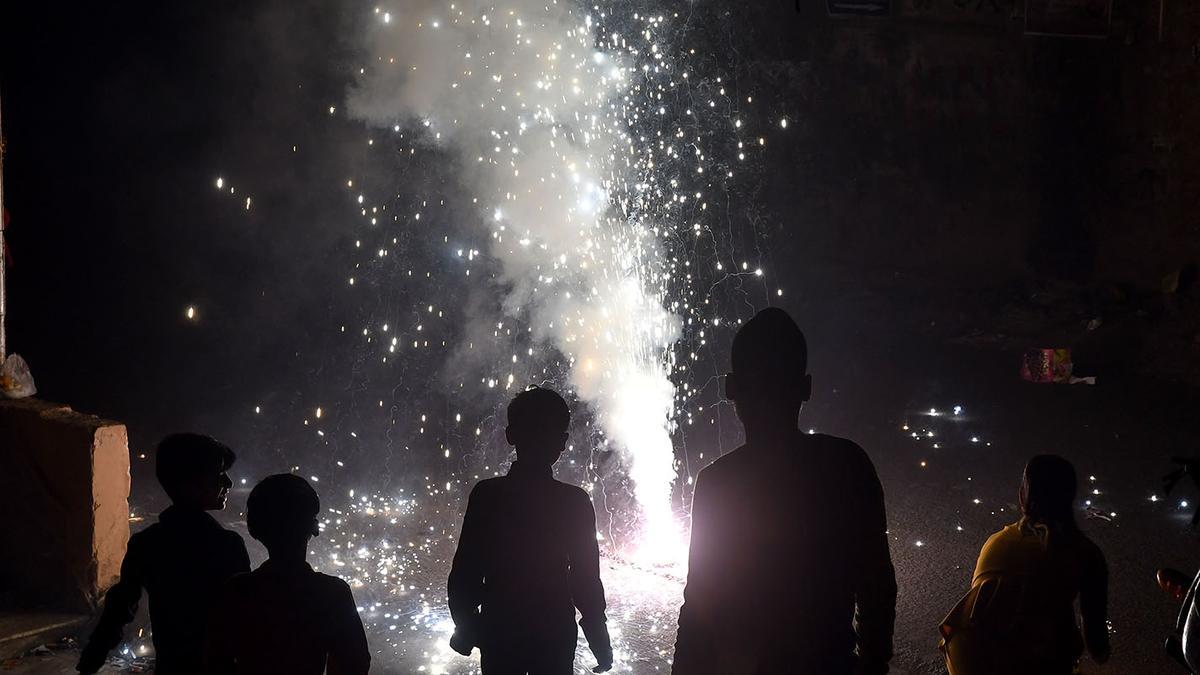
Every year, as the northern hemisphere tilts towards winter and the air over the Indo-Gangetic plains turns heavy, a predictable ritual unfolds. It is not the lighting of lamps or the exchange of sweets, but a secular, institutionalised hunt for the humble firecracker. Pollution boards issue warnings, courts impose bans, and a chorus of commentators declares the cracker to be an environmental pariah. The implicit, and often explicit, suggestion is that the firecracker is an alien, toxic intruder into the pristine Indian festival of Deepavali, a nuisance to be managed, and ideally, eliminated.
This narrative, however, is historically impoverished and constitutionally suspect. It ignores the documented pleas of Indic communities, the complex reality of winter pollution, and a deeper, more troubling lineage to the current bans.
The Petition That Challenged the “No-Nexus” Myth
At the heart of this annual controversy lies a legal and cultural battle that Indic Collective has waged for years. In 2018, the trust filed a writ petition in the Supreme Court of India, challenging the prevailing regulatory wisdom that firecrackers are merely an incidental, dispensable add-on to Deepavali. The petition argued that a 2017 circular, which discouraged crackers, violated the fundamental rights of Indic communities under Article 25(1) of the Constitution – the right to freely profess, practice, and propagate religion.
The petition took direct aim at the Supreme Court’s own 2005 Noise Pollution judgment, which had summarily concluded there was no “nexus” between the celebration of Diwali and the use of fireworks. Indic Collective’s submission was precise: this finding was reached without any analysis of the religious basis of the practice or reference to authoritative texts, and was arguably influenced by the fact that the submission was made on behalf of firecracker manufacturers. The petition contended that the use of fireworks is an essential and integral part of Deepavali for Hindus of both Sanatan Dharma and Arya Samaj variants, as well as for Sikhs and Jains, and that this nexus is demonstrated “irrefutably and indisputably” by documentary evidence.
That evidentiary record drew directly on scriptural vocabulary. The ritual is named Ulka Dana, the offering of blazing torches to the sky and it is attested in texts ranging from the Kartika Mahatmya to the Padma Purana and the Skanda Purana, where the injunction “ulka-hastā narāḥ kuryuḥ pitṝṇāṃ mārga-darśanam” commands celebrants to hold fire aloft so that the departed ancestors, returning from the realm of Yama after Mahalaya, may find their path back. On this reading, the Deepavali cracker is not a modern accretion or a merry-making afterthought but the surviving material form of a funerary-astral ritual whose purpose is to illuminate the ancestral path. This was the textual ground on which Indic Collective rebutted the 2005 “no nexus” finding.
Crucially, the petition reframed the pollution debate. It pointed out that firecrackers are “admittedly neither the sole nor the biggest cause of pollution”. This is a fact that Indic Collective’s Counsel in the matter, J. Sai Deepak has continued to stress. In a detailed thread on X, he noted that the 2018 petitions themselves included expert publications by Dr. Hiren T. Jethva establishing a direct, synergistic relationship between the massive expansion of Basmati Pusa 1121 cultivation in Punjab and Haryana, stubble burning, and the resulting particulate matter. The data is stark: one estimate puts the number of farm fires in a single season at 34,000. The annual spike in Air Quality Index (AQI) often occurs before Diwali, coinciding with this crop burning, not the festival.
For the petition, this was the factual core of the case: a seasonal pollution crisis was being attributed to a three-day ritual while its principal agrarian driver went unregulated.
The Myth of the “Foreign” Cracker
The attempt to paint the firecracker as a foreign import, a Mughal or Chinese contaminant of a “pure” indigenous festival, is ahistorical. The tradition of using sound to mark auspicious occasions and protect harvests predates both the Mughal empire and the widespread use of gunpowder in India.
Historical and anthropological accounts trace the origin of Deepavali fireworks to the agrarian rhythms of peninsular India. In the Tamil calendar, the harvest season of Aippasi and Karthigai (October–December) required farmers to guard their ripening paddy from wild animals. Their primary tool was sound. Farmers would create controlled explosions using dried bamboo joints thrown into fire, a practice known in parts of Tamil Nadu as kattai vedikkai, the bursting of bamboo and local accounts in the state also recall coconuts being thrown in to produce the same percussive crack.. This was not entertainment; it was a practical, organic form of deterrence that told animals to keep away and neighbours that the harvest was safe. Over time, this communal rhythm of sound merged with the festival’s ritual of light.
While the subsequent arrival of Chinese gunpowder chemistry during the medieval period undoubtedly transformed the technology, it did not invent the ritual; rather, it supercharged an existing native framework of percussive celebration. The indigenisation of this technology into the Deepavali tradition was a subsequent, organic evolution. The firecracker, therefore, is not a foreign imposition but an Indian innovation built upon an older, native cultural practice. To claim it was “brought by the Mughals” or is inherently “Chinese” is to erase the ingenuity of Indian farmers and artisans who adapted a new technology to an existing ritual framework.
The Original Ban: Aurangzeb’s War on Native Culture
If the current regulatory impulse to ban crackers has an uncomfortable historical parallel, it is not with a fictional “foreign” origin, but with a very real, indigenous tyrant. The most famous and infamous ban on Deepavali firecrackers was not imposed by a modern pollution board, but by the Mughal emperor Aurangzeb in 1667.
Historical records, including Mirat-i-Ahmadi, document that in 1665, Aurangzeb instructed the governor of Gujarat that Holi and Diwali should be celebrated outside the main bazaars of Ahmedabad. By 1667, this had escalated into a broader order prohibiting the use of fireworks or gunpowder during any religious or social gathering across the empire. While the decree did not explicitly name Diwali, its timing and intent were unmistakable; people immediately understood it as an attack on the festival.
Aurangzeb’s motive was not environmental. It was theological and political: the suppression of practices deemed un-Islamic and the assertion of a homogenising imperial ideology over the cultural life of the native population. His ban was an attempt to eliminate the cultural sense of Indic communities and to strip a public festival of its most visible, collective, and joyous expression.
The modern calls to ban firecrackers, while framed in the language of public health, operate on a strikingly similar logic. They seek to sever the practice from its cultural and religious roots, to declare it non-essential, and to consign it to the private sphere or eliminate it entirely. The institutional discomfort with a loud, public, and communal Hindu festival remains a constant, even if the stated reasons have changed from theology to environmentalism.
Sivakasi: The Economic Cost of Hounding an Indigenous Industry
The hounding of firecrackers is not merely a cultural or constitutional question. It has a geography, a workforce, and a balance sheet. That geography is Sivakasi, a hot, dry town in Tamil Nadu’s Virudhunagar district, which manufactures close to 90% of every firecracker that goes off in India. Jawaharlal Nehru called it “Kutty Japan” (Mini Japan) for the enterprise and industrial energy it demonstrated in the 1960s. Today, it is the backbone of a ₹6,000–7,000 crore industry, and the livelihood anchor for a workforce that is staggering in scale and overwhelmingly female.
The employment numbers bear repeating because they are routinely absent from the pollution debate. Sivakasi’s fireworks cluster employs around 300,000 people directly, and supports nearly 500,000 families through indirect employment, a combined footprint of roughly eight lakh livelihoods in and around a single town. B. Manickam Tagore, the MP for Virudhunagar, put it starkly in September 2025, as the Supreme Court weighed a nationwide ban: “More than 8 lakh workers (majority women) are directly & indirectly employed. This is not just business, it is the backbone of Sivakasi’s economy. A ban means shutting the doors on small-scale units, destroying livelihoods, and handing over the market to smugglers”.
The industry is also highly seasonal. Nearly 80% of Sivakasi’s sales, amounting to more than ₹4,000 crore, come from the Diwali market alone. This concentration means that a ban or a restrictive order issued in the weeks before Deepavali does not merely shave off a marginal revenue stream; it can wipe out the year’s earnings for small manufacturers and traders, leaving unsold inventory and unpaid wages in its wake.
The China Gap: A Self-Inflicted Strategic Loss
The most damaging consequence of the regulatory assault, however, is not the domestic revenue lost. It is the ground ceded to China in a sector where India once had a genuine first-mover advantage. Gunpowder chemistry travelled from China to India centuries ago, but the industrial organisation of fireworks manufacturing in Sivakasi predates the modern Chinese cluster by generations. Yet China now supplies close to 90% of the world’s pyrotechnics, and a single Chinese county, Liuyang in Hunan, accounts for about 70% of China’s fireworks exports.
The scale of the disparity is difficult to overstate. In 2024, Liuyang alone produced fireworks output worth over $7 billion and exported goods worth over $916 million to more than 100 countries. Sivakasi, by contrast, mostly sells to itself. India’s total fireworks exports remain below $1 million, a mere 0.042% of the global export market. As Aravindalochanan Govindan, the Managing Trustee of Indic Collective, noted in a recent post, Sivakasi’s annual sales stood at ₹5,000–6,000 crore in 2015–16. By now, he argued, the industry “should have comfortably crossed ₹15,000–20,000 crores if not for judiciary’s senseless interference & COVID”. The gap between what Sivakasi is and what it could have been is the measure of a decade of regulatory hostility.
That hostility has had a second, perverse effect: it has strengthened the very foreign competitor it claims to guard against. Manickam Tagore warned explicitly that a blanket ban would “kill jobs, while illegal Chinese products will take over the market”. The Supreme Court itself acknowledged this dynamic in its October 2025 relaxation, admitting that a complete prohibition had been counterproductive, driving users toward smuggled, more polluting conventional crackers. In other words, the policy designed to protect Indian air has ended up punishing Indian workers and rewarding Chinese exporters.
This is the strategic cost of treating a cultural practice as a disposable nuisance. Sivakasi is not asking for a pollution free-for-all. Its manufacturers have transitioned to CSIR-NEERI-certified green crackers, and the industry has repeatedly sought a regulatory framework that permits certified, time-bound use rather than outright prohibition. What it has received instead is a decade of intermittent bans, chemical restrictions, and judicial uncertainty that have made long-term investment, export scaling, and workforce formalisation nearly impossible. A cluster that Nehru once held up as a model of Indian industrial efficiency has been left to compete against a Chinese county nine times its retail turnover while its own government keeps threatening to shut it down.
The argument for a truce on firecrackers is therefore not only about religious freedom or historical accuracy. It is about whether India is prepared to let a native industrial cluster – one that employs eight lakh people, most of them women, in a region with few alternative livelihoods, be sacrificed on the altar of a seasonal moral panic, while the global market it could have contested is handed to a strategic rival. That is the material price of the annual war on Deepavali.
The Court’s Shifting Stance: From Blanket Ban to Regulated Coexistence
The Supreme Court’s own jurisprudence reflects a struggle to balance these competing claims. In the Arjun Gopal judgment of 2018, the Court declined a complete ban, instead permitting only “green” crackers with reduced emissions and fixed time slots for bursting.
The subsequent path has been erratic. On December 19, 2024, a bench led by Justice Abhay S. Oka extended a firecracker ban in Delhi to the entire National Capital Region (NCR), observing that a Delhi-only ban would be ineffective. This was extended indefinitely on January 17, 2025. On April 2, 2025, the Court passed a detailed order imposing a year-long, blanket ban on the manufacture, storage, sale, and use of firecrackers in the NCR, even rejecting a plea to allow green crackers on the grounds that their pollution was only 30% less than conventional ones.
Yet, just months later, a new bench led by Chief Justice B.R. Gavai reversed course. On October 10, 2025, it indicated it would revisit the ban. On October 15, 2025, the Court relaxed the absolute ban, permitting the sale and use of NEERI-approved green firecrackers from October 18 to 20, with bursting restricted to specific hours on October 19 and 20. The Court candidly admitted that a complete prohibition had been counterproductive, leading to the smuggling and use of far more harmful conventional crackers. It also noted the lack of substantial difference in AQI between 2018 (when green crackers were introduced) and 2024 (when a blanket ban was imposed). This pragmatic turn, a “test case” for regulated coexistence, implicitly acknowledges that the problem is not the cracker per se, but the failure to enforce a sensible regulatory framework.
Conclusion: A Plea for Historical Honesty and Constitutional Balance
The hounding of the firecracker is a symptom of a deeper intellectual failure. It is easier to demonise a visible, three-day festival than to confront the systemic, year-round sources of pollution like stubble burning, industrial emissions, and vehicular exhaust. It is easier to impose a ban than to build the enforcement infrastructure to ensure that only certified, low-emission products are sold and used responsibly.
Indic Collective’s petition was not a demand for a pollution free-for-all. It was a plea for constitutional honesty, for the Court to recognise that for millions of Indic communities, the firecracker is not an optional extra but a part of a lived, essential tradition. It was a plea for historical accuracy, to acknowledge the native roots of the practice and to see the current bans in the long shadow of Aurangzeb’s cultural war.
A mature, confident India should be capable of celebrating Deepavali without asphyxiating its citizens. That requires regulating the how – through green crackers, time limits, and strict enforcement, rather than engaging in a moral panic that seeks to erase the what. The Supreme Court’s 2025 relaxation, however tentative, is a step towards that more balanced, and more honest, approach. The alternative is to continue a tradition of cultural suppression that began not with a pollution board, but with a Mughal emperor.