Beyond the “Dead Monument”: Rethinking the AMASR Act
“Putting a new idol in a temple is not a damaging act and second, that conservation and worship can be reconciled in practice. ASI kept the damaged idols and the devotees received consecrated ones.”
A temple can be two things at once. For a conservator it is a structure of archaeological value that must be kept from harm. For a devotee it is the dwelling of a deity, where daily worship, festivals and the upkeep of shrines give the building its meaning. India’s heritage framework, The Ancient Monuments and Archaeological Sites and Remains Act, 1958 (AMASR Act) is built mainly around the first view. This article argues that the second deserves a prominent place in the framework, and there is a need for reform and stronger arguments for the “monument versus worship” debate.
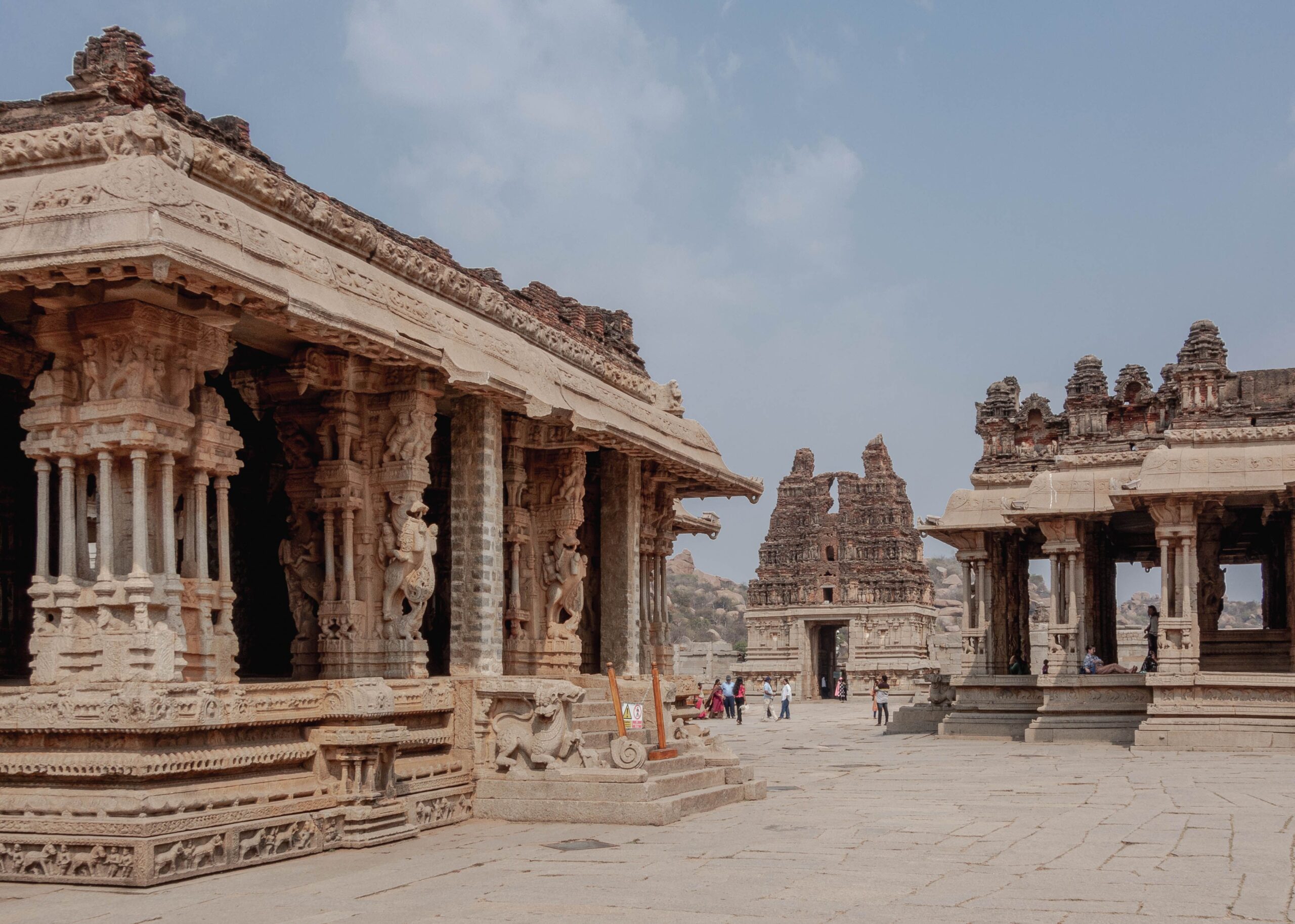
It is forewarned that this is not a general right to revive worship at every protected site, and none is claimed here. Some ruins are best left as ruins, and some sites are claimed by more than one community. However, there is an important distinction to think about regarding the preservation of ancient temples. Is a temple adequately preserved when its architecture survives, even if its shrines remain empty, its damaged idols are not replaced and its religious traditions cannot resume? After all, a temple is not just building blocks, they are not just a collective historical memory and artistic achievement, and their significance extends beyond the physical structures that survive today. A temple is also a sacred space organised around a deity, sustained through worship, festivals, customary practices and the participation of devotees. Temples such as those at Hampi illustrate the complexity of this question. Their surviving architecture represents a major civilisational achievement, while their historical association with worship remains significant to devotees.
The AMASR Act, 1958, provides the legal framework for protecting monuments and archaeological sites of national importance. The temples become “living” and “dead” using a test fixed at the date of takeover by ASI (Archeological Survey of India). India therefore needs a framework that can work between preserving a monument’s material remains and protecting the religious functions of a temple.
What the Law says
The AMASR Act was enacted in 1958 to provide for the preservation of ancient and historical monuments and archaeological sites and remains of national importance. It followed earlier legislation, including the Ancient Monuments Preservation Act, 1904, and the Ancient and Historical Monuments and Archaeological Sites and Remains (Declaration of National Importance) Act, 1951. The 1958 Act came into force on 15 October 1959.
Section 16 of the AMASR Act provides that a protected monument maintained by the Central Government, which is a place of worship or shrine, cannot be used for a purpose inconsistent with its character. It also provides for protection against pollution or desecration where a protected monument or part of it is used for religious worship or observances.
The working rule is this. ASI permits worship where it was in vogue when the monument came into its custody, and refuses to revive it where it was not or where it had long been abandoned.
The practical effects are large. According to press reports, 2,873 of the 3,693 centrally protected monuments are designated as places where neither puja nor namaz is performed. The Taj Mahal’s Friday prayers and the Moti Masjid at the Red Fort continue because worship was already under way. The Lingaraja temple, maintained by ASI and a temple trust, continues worship for the same reason. Puja is prohibited at Rudra Mahalaya in Siddhpur and the Vijayalaya Choleswaram temple at Mahabalipuram in order – as mandated by ASI – to protect dilapidated monuments.
In 2023, the Parliamentary Standing Committee on Transport, Tourism and Culture recommended that ASI explore permitting puja, worship and certain religious activities at centrally protected monuments of religious significance, provided it can be shown that conservation will not suffer. The Ministry replied that it had noted the suggestion for exploring feasibility, and the committee voiced “deep concern and disappointment” at the lack of seriousness in that response.
There are cases however, where the AMASR Act has been challenged. The Martand Sun Temple in Kashmir shows the gap between status and practice. ASI treats it as a non-living monument and objected to a 2022 puja attended by the Lieutenant Governor. In 2024 the J&K government formally ordered the restoration of the temple- in 2026 devotees successfully congregated at the temple to mark the Baan Maas Mela during the auspicious Adhik Maas. Large-scale spiritual rituals were conducted, and special prasad was openly served inside the protected complex. ASI hasn’t changed its status from non-living monument, but normal worship has begun after restoration by the government.
The consequences extend beyond whether a ritual may be performed. They can affect whether a damaged idol may be replaced, a missing deity reinstalled, a shrine restored or a religious tradition re-established under appropriate conservation safeguards. The concern is that the absence of worship at one point in time should not, by itself, become a permanent substitute for examining a temple’s history, religious character, physical condition and the wishes of its legitimate custodians and devotees.
The Thanjavur judgment : When Conservation and Worship Can Coexist
A significant development came with the Madras High Court’s judgment of 28 September 2026 concerning the Brihadeeswarar Temple in Thanjavur. The Division Bench of Justices C. V. Karthikeyan and R. Sakthivel considered three writ petitions. The Brihadeeswarar temple has shrines for eight Dikpalakas. Four idols were missing and four damaged. ASI had refused to remove the damaged idols and install new ones, saying the 1958 Act and the 1959 Rules did not permit it.
The court records that the respondents first contended that, because ASI controls the temple, idols could never be replaced or installed. Their later representations were only that no structural damage should result. The judgement reasons that the reliefs sought were not to destroy, remove, alter or deface the idols, only to install missing idols and replace broken ones, and that the broken idols could be preserved by ASI. The ruling adds that ASI may keep them, but that shrines of a living temple cannot be left empty or hold broken deities. The court directed the District Collector, HR&CE, the Hereditary Trustee and ASI to replace the four damaged idols and install the four missing ones.
Here, two points are important. Putting a new idol in a temple is not a damaging act and second, that conservation and worship can be reconciled in practice. ASI kept the damaged idols and the devotees received consecrated ones. The judgment therefore supports the argument that installing and replacing idols and carrying out sanctioned repairs in a living, historically attested temple does not breach the AMASR Act. This argument can be considered for ASI’s dead temples- Can these provisions apply to works needed to seat an idol? Does the reasoning extend to temples where worship has been interrupted?
What Makes a Temple a Temple? Character, Custody and Worship
Any reform must distinguish questions that are often conflated in debates over protected religious sites.
First, there is the question of religious character: what was the site built for, and what evidence exists of its religious use? Second, there is ownership and endowment: who holds the property or rights associated with the institution? Third, there is management: who is legally authorised to administer the temple and its affairs? Finally, there is conservation: what restrictions are necessary to protect the monument and its archaeological remains?
These questions are related, but they are not interchangeable. A site’s historical use does not automatically establish present ownership, and proof of public religious character does not by itself confer an unrestricted right to conduct rituals. Equally, archaeological protection should not be treated as if it independently resolves every question about the site’s religious character or management.
The Supreme Court’s 2020 judgment concerning the Padmanabhaswamy Temple in Kerala illustrates the importance of distinguishing a temple’s institutional character from its management. The litigation concerned the rights of the Travancore royal family and the statutory framework governing the temple. The Court recognised the family’s shebait rights within the legal arrangement considered in that case. Although the dispute was not about the AMASR Act, it demonstrates that the public character of a temple and the identity of those entitled to manage its affairs are separate legal questions.
The Padur temple litigation may also offer a useful line of inquiry into how a temple’s religious and institutional character is established. Evidence such as historical endowments, customary worship, public participation, festivals, processional traditions and the use of temple property may be relevant, depending on the questions before the court. The precise findings and legal principles of the Padur case should, however, be cited from the judgment itself before they are used to support a broader proposition.
Architectural features, inscriptions, surviving deities and the layout of a sanctum can also help explain a site’s historical purpose. Their legal significance depends on the evidence and the issue under consideration. They should neither be treated as automatically conclusive proof of ownership nor dismissed as irrelevant to the site’s religious history.
A related but distinct consideration is the Places of Worship (Special Provisions) Act, 1991, which generally seeks to preserve the religious character of places of worship as it existed on 15 August 1947, subject to its statutory provisions and exceptions. The Places of Worship Act and the AMASR Act serve different legal purposes. Reform of archaeological conservation rules must therefore account for the applicable law rather than assume that an application to resume worship can be resolved by reference to the AMASR Act alone.
The broader point is that a site’s religious character, the rights of its custodians, the evidence of historical worship and the conservation requirements should be assessed distinctly and then considered together. A date-of-takeover rule is too blunt to answer all these questions.
Beyond Thanjavur: The Case for Site-Specific Assessment
The need for a more considered framework becomes clearer when the experiences of other protected sites are examined. They do not all support the same remedy, but they demonstrate why a uniform approach is inadequate.
Bhojshala, Bijamandal, Deogarh, Khajuraho, Konark, Hampi and the Shore Temple illustrate the varied challenges surrounding worship at ASI-protected temples, from disputed religious identities to dormant sanctums and restrictions on rituals.
Explore each case individually to examine its historical context, current status and the scope for reforming the AMASR Act to balance archaeological conservation with religious continuity and worship.
Bhojshala
On Bhojshala in Dhar, in the 2026 Madhya Pradesh High Court ruling, following an ASI investigation ordered in 2024, that the complex is a Hindu temple of Goddess Vagdevi (Saraswati). The court quashed the 2003 shared-use arrangement and treated Hindu continuity as never extinguished.
Vidisha’s Bijamandal
Vidisha’s Bijamandal is protected, and prayers inside stopped for both muslim and hindu communities under a 1965 agreement that also provided land for a new Eidgah. ASI relied in 2024 on a 1951 notification describing it as a mosque, and that classification is under challenge. Hindu groups are generally not permitted to perform routine puja inside the locked complex. By tradition, restricted symbolic worship or rituals are permitted just outside the gates or within specified guidelines only once a year on the occasion of Nag Panchami.
The Dashavatara Temple at Deogarh in Uttar Pradesh
The Dashavatara Temple at Deogarh in Uttar Pradesh illustrates a different problem from either Bhojshala or Bijamandal. It has no dispute of competing claims, but is a temple whose devotional life has simply lapsed while its structure survives. The temple is an ASI-protected monument, and its original sanctum no longer houses the principal idol of Vishnu; the idol is missing, and the temple is not known for regular, institutional daily worship in the way that living temples are. Yet it is neither a ruin nor an abandoned shell. It is one of the earliest surviving Nagara-style stone temples, with an intact sanctum and a sculptural majesty that still makes its religious purpose legible. Deogarh is therefore the clearest case for the “dormant” category proposed below: a temple with an intact sanctum, evidence of earlier worship, no competing claimant, and a devotional function that has ceased without the site itself having collapsed into ruin. A date-of-takeover rule has nothing useful to say about such a site. A published classification would.
Khajuraho and Konark
Khajuraho and Konark show other grounds. At Khajuraho, while the Matangeshwar Temple within the Khajuraho complex is an active “living” temple where massive Shivaratri celebrations happen, the adjacent Western and Eastern groups of temples (like the Kandariya Mahadev or Lakshmana temples) are strictly non-living- no rituals are permitted in the magnificent, intact sanctums of the Western Group- Devotees and cultural organizations have raised voices asking why worship is restricted to only one temple when multiple surrounding structures house perfectly intact deities. In Konark, the main temple sanctuary (Deula) collapsed long ago, and the surviving Audience Hall (Jagamohana) was filled with sand by the British in the early 1900s to ensure structural stability. Now it is a completely non-living tourist monument. Every year during the Samba Dashami festival, thousands of local devotees gather outside the peripheral walls of the temple to worship Suryanarayana. Various local outfits have consistently demanded that the ASI clear the sand from the interior, structurally stabilize the monument, and allow a symbolic, permanent ritual space inside the complex.
Hampi (Vijayanagara)
Local communities and socio-religious groups have made intense public demands to restore active worship. Hampi presents the broader civilisational dimension of the debate. Its temples and shrines are part of a landscape whose religious significance extends beyond the survival of individual buildings. Where a shrine is structurally safe and the historical evidence supports its religious use, the question of restoration should not be dismissed merely because worship has ceased.
The Shore Temple, Mahabalipuram, TN
Local heritage groups and Hindu activists have repeatedly requested permission to conduct seasonal puja rituals, particularly during Maha Shivaratri. Devotees argue that because the main Shivalinga and the reclining Ananthasayi Vishnu idols are structurally intact inside the sanctum sanctorum, they should not be treated merely as museum artifacts.
Across these examples, the appropriate outcome will differ. Some sites may support regular worship; others may accommodate only occasional observances; still others may need to remain closed to ritual activity for compelling conservation or legal reasons. The reform objective is not a predetermined result for every temple. It is a fair process in which religious significance is a legitimate consideration rather than an issue excluded at the outset.
Jawhar Sircar’s article in the Times of India (31 May 2022) gives a strong counterweight. He raises capacity. ASI manages roughly 3,700 sites on a very small share of the central budget, and he suggests de-notifying minor monuments such as Kos Minars or transferring them to local communities. He argues that the Places of Worship Act, which freezes the religious character of places of worship as of 15 August 1947, should be defended and that reopening old sites is a never-ending process.
A possible framework for living temples
In a number of protected monuments of ASI, many are temples where shrines have been desecrated, their idols defaced. For a devotee, very unfortunately, this corrodes the
sanctity of the Temple and many temples continue to suffer. India needs an approach that recognises the dual significance of ancient temples: they are archaeological heritage and, where supported by the evidence and applicable law, sacred institutions. The following reforms would help reconcile these responsibilities.
First, a short statutory clarification. The Act could state that installing, replacing or reinstalling idols and ritual objects in a protected place of worship is not alteration or defacement, provided the work is reversible, does not harm the fabric and is carried out under ASI supervision.
Second, a three-way classification of protected temples as active, dormant or ruin. A dormant temple would be one with an intact sanctum, evidence of earlier worship and no competing claimant. Each category would have a different default rule and the classification would be published with reasons. ASI would review the 2,873 sites now designated as non-worship sites, starting with those that meet these conditions.
Third, an application process. A temple authority or devotee body would apply, and ASI would assess historical evidence, structural safety, conservation needs and any competing claim within a fixed time. Traditional authorities, Sthapathis and the state endowment department would be consulted, as the Madras court directed in a particular case. Decisions would be reasoned and written, with an appeal to an independent body before a writ becomes the only remedy.
Fourth, conservation conditions in place of refusal. The Khajuraho concern about soot could be met by limits on lamps, ritual hours and offerings, and by monitoring. As at Thanjavur, ASI could retain original or damaged objects.
Fifth, capacity. Better funding and staffing, and de-notifying inconsequential monuments, would let ASI concentrate its resources.
A Temple Is More Than What Remains
The AMASR Act has an essential purpose: protecting India’s irreplaceable archaeological heritage. But a framework designed to conserve physical structures must also be capable of recognising the religious life of the temples it protects.
The Thanjavur judgment of September 2026 did not hold that every ASI-protected temple may resume worship. It held that, in a living temple with historically attested shrines, replacing and installing idols is not barred by the provision ASI relied on. That is a modest holding, but it undercuts the assumption that conservation and worship are opposed. India can protect ancient temples without treating their religious life as irrelevant to their preservation, provided it replaces a date-of-takeover test with a process that examines each site on its evidence, and offers a concrete example of how the two objectives can coexist.
A temple can survive as architecture and still be lost as a temple. The law should not force India to choose between the stone and the sacred. Thanjavur did not answer every question. It showed only that the first question need not be ‘when was worship stopped?’ It can be ‘what does this site require – as a monument and as a temple?’