

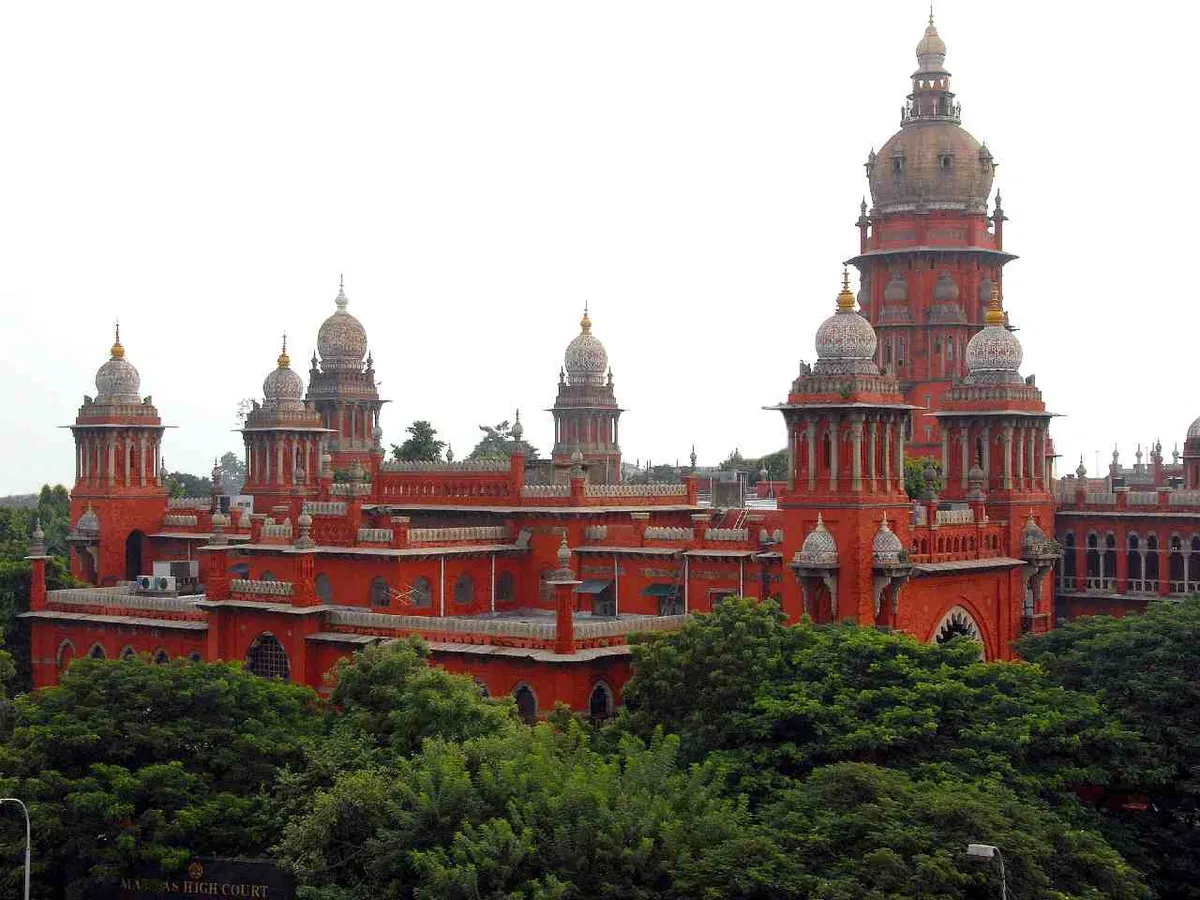
The Temple Paradox: A Republic That Governs the Gods
There are moments in the life of a civilization when it must stop congratulating itself and begin questioning its conscience. Moments when progress, loudly proclaimed, must be weighed against what it has quietly destroyed. India stands at such a moment today—confident in its secular democracy, proud of its constitutional order, and yet curiously unaware that it governs, audits, regulates, and disciplines the most ancient religious institutions on earth with the calm efficiency of a revenue department.
This is not an exaggeration. It is an administrative fact.
In Tamil Nadu alone, more than 36,000 Hindu temples are directly controlled by a state department—the Hindu Religious and Charitable Endowments Department—staffed by officers transferable like clerks, accountable to ministers, and answerable neither to the deity nor the devotee. Karnataka’s Muzrai Department oversees another 34,000 temples. Andhra Pradesh manages over 33,000. Across India, the number of temples under direct or indirect state control runs well into the hundreds of thousands.
No other religion in this republic lives under such guardianship.
This is the paradox of our age: the most decentralised religious civilisation administered by the most centralised modern state.
The Temple Was Never a Mere Shrine
The tragedy begins with a misunderstanding so profound that it has passed for common sense. The Indian temple was never merely a place of worship. It was not a silent hall where belief flickered briefly and departed. It was a living institution—economic, educational, artistic, and moral.
At Thanjavur, the Brihadeeshwara Temple was not simply Rajaraja Chola’s architectural triumph; it was a university in stone. Inscriptions record over 60,000 palm-leaf manuscripts, stipends for scholars, salaries for musicians, and even the appointment of an astronomer—Perunkani—to calculate ritual calendars based on planetary movements. Knowledge was not tolerated near the sacred; it was sanctified by it.
At Chidambaram, the Nataraja Temple administered nearly 20,000 acres of land, functioning as a lender to farmers and traders, a stabiliser of local economies, and a redistributor of wealth. Tirumala’s annadanam has fed thousands daily for over eight centuries, uninterrupted by famine, conquest, or regime change. These were not anomalies. They were the institutional grammar of Indian civilisation.
Temples paid teachers, fed the poor, maintained water bodies, patronised sculpture and dance, and sustained entire occupational communities. They did so without taxation, without state subsidy, and without coercion. Their authority flowed from legitimacy, not law.
When the State Entered the Sanctum
Then came the modern state, bearing not swords but statutes.
Colonial administrators, baffled by institutions they did not understand, began the process with the Religious Endowments Act of 1863, placing temples under bureaucratic supervision in the name of preventing mismanagement. Collectors became trustees. Sacred trusts became administrative units. The covenant between deity and devotee was replaced by a ledger.
Independent India inherited this machinery—and instead of dismantling it, perfected it.
Today, Tamil Nadu’s HR&CE Department controls temple assets worth tens of thousands of crores, yet official records reveal that over 8,000 temples have received no maintenance grants for more than ten years. The Comptroller and Auditor General has noted that less than 5% of departmental expenditure is devoted to structural conservation. The state assumed control in the name of protection—and then presided over neglect.
The irony is cruel: temples that once sustained entire regions now petition the government for permission to repair their roofs.
The Silent Disappearance of Sacred Land
But the deepest wound is not administrative. It is economic.
Temple autonomy rested on land. Endowments ensured continuity. Fields funded rituals; tanks sustained agriculture; estates financed charity. Land was not wealth alone—it was independence.
In the 1980s, official records acknowledged approximately 5.25 lakh acres of temple land in Tamil Nadu. Subsequent surveys revealed another 2 lakh acres held by religious institutions outside departmental control. Today, official figures acknowledge barely 4.7 lakh acres.
Nearly 60,000 acres have vanished.
Not through legislation. Not through compensation. But through administrative evaporation.
In Virudhachalam, almost 16,000 acres are unaccounted for. In Srivilliputhur, over 3,000 acres have disappeared. In Vadalur, more than 500 acres are gone. In Karur town, over 70% of temple land lies occupied rent-free. Temple tanks and ponds—once vital to irrigation and ecology—have been encroached upon or erased from records.
When land vanishes, autonomy follows. What remains is dependence.
Reform That Impoverished the Sacred
The abolition of estates and inams in the 1950s was proclaimed as social justice. Yet temples—juridical persons and perpetual charities—were denied the compensation extended to private zamindars. Annuities fixed in the early 1950s were neither revised nor reliably paid.
In Kerala, nearly 1.5 lakh acres of church-owned estates were explicitly exempted from land reforms. Temple lands were not. The Koodalmanikyam Temple, once among the largest landholders in the region, lost not only land but records—destroyed within the very departments meant to preserve them.
This was not reform. It was selective impoverishment.
Temples that once sustained priests, artisans, musicians, flower sellers, and water managers were reduced to fiscal wards of the state. A self-sustaining ritual economy collapsed into bureaucratic dependency.
When Courts Became Arbiters of Faith
The Constitution promised autonomy. Article 26 guaranteed religious denominations the right to manage their own affairs. Yet through narrow definitions of “denomination” and the invention of the Essential Religious Practices doctrine, the judiciary transformed itself into an unintended theologian.
Most Hindu temples fail the judicial test of denomination—not because they lack identity, but because Hinduism lacks hierarchy. Its pluralism becomes its constitutional weakness. Courts then declare temple administration “secular,” permitting governments to appoint trustees, divert funds, and regulate rituals—while claiming religious neutrality.
Temple revenues, donated explicitly for worship, are routinely diverted to secular purposes, including administrative salaries and government programs. The shield of the Constitution becomes a sieve.
Language, Ritual, and the Power to Redefine
The archanai language controversy reveals the nakedness of power. HR&CE circulars mandated Tamil archanai, overriding centuries of Sanskrit ritual practice. When priests objected, courts ruled that language was “non-religious.”
For the devotee, sound is sacred. For the state, it is policy.
When a Chief Minister declared that gods unwilling to accept Tamil worship could “go north,” the state was not regulating religion—it was redefining it. Secularism here was not neutrality; it was supremacy.
Monuments Without Memory
India possesses 3,693 centrally protected monuments, yet a CAG report revealed that 92 monuments had simply vanished. Tamil Nadu alone has over 34,000 temples, many in advanced stages of decay. Cement replaces lime plaster. Untrained contractors erase centuries of engineering wisdom.
India has fewer than 50 trained conservation scientists for thousands of monuments. The sthapati tradition—once hereditary and precise—has dwindled to fewer than 200 practitioners, most elderly. We have monuments without custodians, wealth without purpose, and law without conscience.
The Choice Before a Civilization
The temple does not ask for privilege. It asks for parity.
If churches may govern themselves, if mosques may manage waqfs, if gurudwaras may elect committees—why must temples remain wards of the state?
This is not secularism. It is inheritance without responsibility.
A civilization that distrusts its own institutions will eventually hollow itself out. A state that governs faith will one day inherit its emptiness.
To restore temple autonomy is not regression. It is restitution. It is the return of stewardship to those for whom devotion is not an entry in a ledger, but a covenant across generations.
Until that day arrives, the temple paradox will remain—
a secular republic, seated quietly and confidently,
upon a throne it once promised never to occupy.
Note: This is the preview of the book titled “The Temple Paradox: How Secular Democracy Undermines Religious Freedom in India” prepared by Centre For Integral Studies, the research wing of Indic Collective Trust. The book is scheduled to be released on Makar Sankranti (15th Jan 2026).


K. Raghuram
Very good article that comes straight to the point with clear facts