An Order of the Past: Drift from Civility to Disorder
The post-1945 international order standing on multilateralism, sovereignty, and rules-based engagement has been now broken by the very nations that stood guard to it. Three concurrent failures accelerated this collapse: the United States' oscillation between coercive unilateralism; permanent conflict in the Middle East as an economic utility and the failure of custodians to rise above their avarice. What we are witnessing is the emergence of a far harsher and more unstable international landscape, defined by selective legality, coercive economics, and regional conflicts that have become selfishly self-sustaining.
At the beginning of the year in January, Canadian Prime Minister Mark Carney delivered one of the most unusually candid statements. Standing at the World Economic Forum, Carney declared that the post war world order ‘is currently experiencing a “rupture, not a transition”. He described the post-WWII rules-based system as a “partially false” fiction, noting that it was a system where “the strongest would exempt themselves when convenient”. And although scholars of international relations had been writing the obituary of liberal institutionalism for years, it was striking to hear such a blunt assessment from a sitting leader of a country that had been one of its most ardent champions.
When the Hegemon Stops Leading
Charles Kindleberger, writing on the interwar collapse, argued that systemic chaos emerges when no power is both able and willing to provide public goods such as monetary stability, market access, and reassurance. The post-1945 American order, whatever its hypocrisies, broadly operated on this premise. The United States enforced sea lanes, underwrote alliances, and positioned itself as the ultimate guarantor of a liberal international system.
The problem is not simply that American power has relatively declined. Power transitions are normal in world politics. The deeper problem is that the United States has ceased to act as though the system it built is worth preserving. In recent times, Washington has increasingly weaponised international interdependence, using tariffs, sanctions, export controls, and selective mandates such as “America First” as tools of pressure even against allies.
And this has been brewing over time; in his first term, Trump’s instincts appeared broadly isolationist: sceptical of alliances, dismissive of multilateral institutions, and inclined toward retrenchment – withdrawing from the Trans-Pacific Partnership, the Paris Agreement, the JCPOA; and reducing troops in Afghanistan. In his second term, the pattern shifted to coercive re-engagement. The tariff wars, the pressure on European NATO members and dismantling foreign assistance programs. An analysis by the European Union Institute of Security Studies shows that in the last 12 months, the United States carried out 493 military strikes, which is way more than all four years of Biden’s presidency (2021-24), -287 strikes and just a few short of Trump’s first term (2017-20) – 558 strikes. This is ‘predatory engagement’: the erosion of the professional foreign policy bureaucracy all signals a state no longer invested in global leadership as a public function but on power and might.
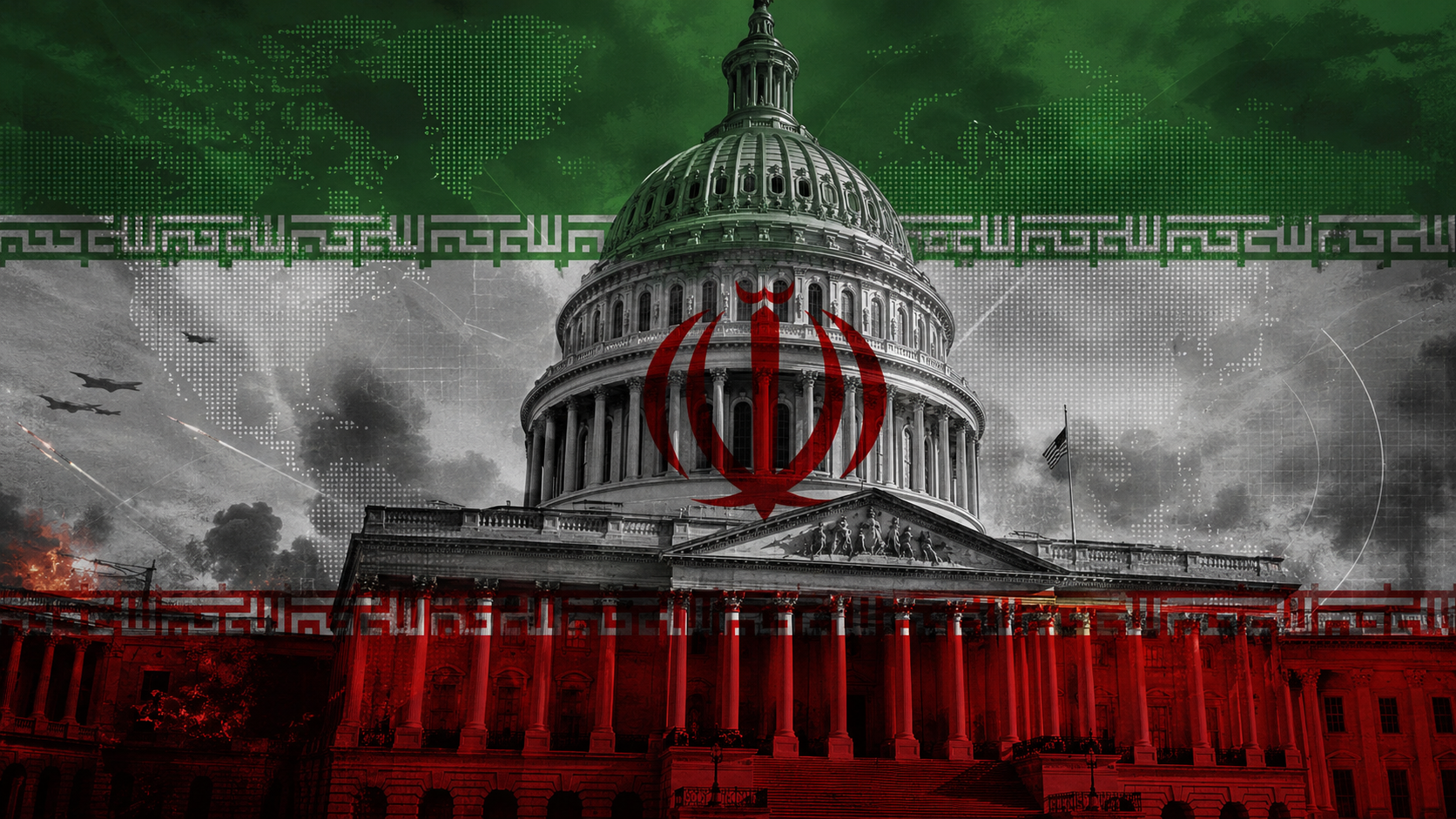
The Middle East has become the most visible theatre of this. For seventy years, the region was a laboratory for American hegemonic management, sometimes benevolent, most often self-serving. And this US-Israel attack on Iran is the logical endpoint of a process that began long before Donald Trump’s second inauguration: the reduction of American policy to pure self-serving motives.
America and the Political Economy of Disorder
To understand the Middle East today, one must begin not with 9/11, nor with the 1979 Iranian Revolution, but with August 1953 in Tehran. Operation Ajax, the CIA orchestrated coup that overthrew the democratically elected Prime Minister Mohammad Mosaddegh, is the foundational act of American strategic policy in the modern Middle East. Mosaddegh’s simple sin was that he thought of his nation’s interest: he had nationalised the Anglo-Iranian Oil Company, asserting that Iranian oil belonged to Iranians. The response from Washington and London was to engineer his removal, restore the Shah Mohammad Reza Pahlavi to absolute power, and effectively transfer sovereignty of Iran’s energy resources back to Western corporations.
Stephen Kinzer’s reconstruction in All the Shah’s Men (2003) makes clear that Operation Ajax was a statement by the United States that it possessed both the right and the capability to determine the character of governance in oil-rich nations, and that democratic self-determination was, at best, a secondary consideration.
Now, under Donald Trump’s second administration, inaugurated in January 2025, the United States managed the remarkable feat of abandoning its pretence of a “big brother” image. One must ask directly: what precisely justifies an unprovoked attack on Iran by the US on Feb 28? The UN Charter’s Article 2(4) prohibits the threat or use of force against the territorial integrity of any state.
What then does this war serve for the US – a control over the oil economy of Iran? A war in the Middle East for economic ends? The United States’ two primary regional anchor relationships with Saudi Arabia and with Israel both require, as a precondition of their stability, an Iran that is contained and delegitimised. The most effective mechanism for achieving this containment without direct military confrontation is to sustain a proxy conflict architecture in which Arab Sunni states perpetually counter Iranian Shia influence.
The empirical record is stark. Saudi Arabia has remained heavily dependent on U.S. arms: SIPRI reports that the United States supplied 74% of Saudi arms imports in 2020-24. During this same period, Saudi Arabia was prosecuting the war in Yemen, a conflict that the UN described as the world’s worst humanitarian catastrophe. The economic logic is visible in SIPRI’s Arms Transfers Database: according to SIPRI, the Middle East accounted for 27% of global arms imports in 2020-24, with the United States accounting for the largest share of exports. War, in the Middle East, is thus the creation for the US to gain from the disorder. This is the moral terrain on which the United States has chosen to stand. The raison d’être offered to the American public, security, counter-terrorism, democratic values has been progressively evacuated of content. What remains is the political economy: arms contracts and energy supply chains.
India’s Sleepwalking Decade
India emerged from the 2014 general election with one of the most decisive mandates in its post-independence history, and with a Prime Minister who had explicitly promised to conduct a more muscular, strategically assertive foreign policy. Twelve years later, the balance sheet of Indian foreign policy in the Middle East, which (the Gulf Cooperation Council region) is home to around 8.9 million Indians, accounts for approximately 30 percent of Indian remittances, and yet India remains highly exposed to West Asian energy disruptions: Reuters reported in March 2026 that about 40% of India’s oil imports move through the Strait of Hormuz, is not a record of strategic consolidation.
Consider the relationship with Qatar. India is one of the largest buyers of Qatari LNG, purchasing approximately 8.5 million tonnes annually under long-term contracts. Qatar’s strategic posture is, to put it mildly, awkward for India. In 2023, eight retired Indian Navy officers were sentenced to death in Qatar on espionage charges, the death sentences were ultimately commuted but it reflected the fragility of a bilateral relationship India had complacently assumed to be stable. Then again, in 2022, against Nupur Sharma’s statement on Prophet Mohammad, Qatar’s Assistant Foreign Minister threatened India that “Unless officially and systemically confronted, the systemic hate speech targeting Islam in India will be considered a deliberate insult against two billion Muslims”. These episodes explain how little strategic equity India had built with a state from which it purchased enormous volumes of energy.
The failures extend to the geopolitical triangle between India, China, and the Middle East. China has signed 25-year comprehensive cooperation agreements with both Iran (2021) and Saudi Arabia (2022), positioning itself as the region’s indispensable infrastructure partner through the Belt and Road Initiative. India announced the India Middle East Europe Economic Corridor (IMEC) at the G20 summit in New Delhi in September 2023, generating considerable excitement. As of 2026, its implementation framework still remains in an embryonic state. This shows India’s declared ambitions and its executive capacity is not only embarrassing but also consequential, with only a few days into the US-Israel-Iran War, the country was grappling with fuel and natural gas disruptions.
And yet the full accounting of India’s diplomatic decade cannot be completed without confronting its most uncomfortable question: if war were to knock on India’s door tomorrow, not a skirmish on the Line of Actual Control with China, not a terrorist incident attributable to Pakistan, but a genuine multi-front military confrontation- who would India’s allies be? The question has no satisfactory answer. This is the strategic cost of India’s “performative multipolarity”: the pursuit of relationships with every major power simultaneously, at insufficient depth with any, producing a diplomatic portfolio that is impressive in its breadth and alarmingly shallow in its load-bearing capacity.
Russia, India’s most historically reliable defence partner, is today compromised as an ally. Moscow is materially dependent on Beijing, economically strangled by Western sanctions, and militarily consumed by the war in Ukraine. India’s continued purchase of discounted Russian crude since 2022 has now been compromised thanks to the US. The “all-weather friendship” between India and Russia, never formalised into a mutual defence commitment.
Japan presents a more nuanced picture: the Quad framework and ODA investment are genuine signals of alignment, but Japan’s constitutional constraints on collective self-defence mean Tokyo cannot function as a military guarantor. The Quad itself has no Article 5-equivalent mutual defence obligation and no permanent joint command; it is a consultative forum, not an alliance.
The United States has sold India defence equipment, yes the GE-F414 jet engines, MQ-9B drones, C-17 transport aircraft, but is no friend. When India has differed from Washington on Russia, on Palestine, or on the FATF treatment of Pakistan, the American response has been pressure and no give. The US Commission on International Religious Freedom went as far as recommending sanctions on the RSS and R&AW. This is a classically asymmetrical relationship.
Let’s take a closer look at the new commitment of Reliance Industries of a $300 billion investment in the US. The operator of the world’s largest oil refining complex at Jamnagar was “profiteering” from discounted Russian crude, all to be stopped by the US tariffs. What followed was a corporate genuflection: a $300 billion, 20-year offtake agreement to build a new refinery on American soil at Brownsville, Texas, processing American shale oil for America’s benefit. Now connect the dots. In early 2026, Washington granted Reliance a US general license to directly import Venezuelan heavy oil, the very grade of crude Jamnagar’s refinery was engineered to process, and which Reliance had purchased heavily before Washington first imposed sanctions in 2019. The refinery is being built at Brownsville, a port sitting at the southernmost tip of Texas, right on the US-Mexico border, and geographically the closest major American port to Venezuela, no American port is better positioned to receive Venezuelan crude. The whole arrangement is quite transparent. Pressure Reliance off Russian oil. Award it a Venezuelan license. Hand it a port tailor-made to receive that oil. And collect, in exchange, a refinery built on American soil, with Indian capital, serving American energy infrastructure. China is home to Sinopec (China Petroleum & Chemical Corporation), and yet, China’s Sinopec, with its 5+ million bpd capacity, is NOT building a refinery in the United States. Reliance is doing precisely the opposite: gifting the United States an energy asset, on its own territory, funded in part by Indian capital. India speaks the language of strategic autonomy at every multilateral forum; yet its most powerful corporations speak a different language entirely.
The Afghanistan chapter is perhaps India’s biggest failure. Between 2001 and 2021, India invested approximately US $3 billion in Afghan reconstruction, roads, dams, the parliament building in Kabul, consulates, and scholarships for Afghan students in Indian universities. This was thought of as an investment in a friendly state on Pakistan’s western border. When the Taliban retook Kabul in August 2021, India fell silent. Three years later, India’s posture toward the Taliban government has no durable leverage, understandable in operational terms, but not what one would expect post $3 billion and two decades of relationship-building.
India’s failure brought out by this war is not the failure of a weak state but the failure of a capable state that has chosen comfort over strategy. It has chosen to purchase oil from states that do not support it. It has chosen to speak loudly at international forums about multipolarity and strategic autonomy while building none of the hard relationships. It has stood, silent and equidistant, while a war of extraordinary violence consumes Iran.
The Burden of Choice
European Commission President Ursula von der Leyen also declared that the “old world order is dead” or “gone”. And this is a “defeatist” mentality; it does not speak of a vision for a new world. States must call out violations of the rules-based order and actively invest in building a better future – something that India has declined to do. India does not need to invite war; it must not. But restraint is not the same as silence, and silence on foundational questions, international law, the rights of small nations against the appetites of large ones, is complicity by abstention.
BRICS, the SCO, the G20 presidency, the Global South narrative: India has collected institutional memberships and platform moments the way one collects stationery, abundantly and without intent to use them. The path forward requires India to decide what kind of world order it wants to live in, and what it is prepared to say and do to build it. The world needs an order in which rules bind all states equally, rather than serving as instruments of hegemonic privilege selectively enforced by those with military and financial power. This, ultimately, is the challenge before India and before the world. Unless a more equitable world is built, the drift from civility to disorder will not remain a passing phase but the global order of our age.
List of References
1. Carney, M. (2026, January 20). Principled and pragmatic: Canada’s path. Office of the Prime Minister of Canada. https://www.pm.gc.ca/en/news/speeches/2026/01/20/principled-and-pragmatic-canadas-path-prime-minister-carney-addresses
2. Centre for American Progress. (2025). 100 days of the Trump administration’s foreign policy: Global chaos, American weakness, and human suffering. https://www.americanprogress.org/article/100-days-of-the-trump-administrations-foreign-policy-global-chaos-american-weakness-and-human-suffering/
3. Climate TRACE. (2024). RPL Jamnagar: The world’s largest oil refinery. https://climatetrace.org/news/rpl-jamnagar-the-worlds-largest-oil-refinery
4. The Economic Times. (2026). Qatar halts LNG output after attacks: Disruptions to hit Indian supplies, city gas firms flag concerns. https://economictimes.indiatimes.com/industry/energy/oil-gas/qatar-halts-lng-output-after-attacks-disruptions-to-hit-indian-supplies-city-gas-firms-flag-concerns/articleshow/129018735.cms
5. Embassy of India, Riyadh. (n.d.). India–GCC relations. Ministry of External Affairs, Government of India. https://www.eoiriyadh.gov.in/page/india-gcc-relations/
6. George, M., Djokic, K., Hussain, Z., Wezeman, P. D., & Wezeman, S. T. (2025, March). Trends in international arms transfers, 2024 (SIPRI Fact Sheet). Stockholm International Peace Research Institute. https://www.sipri.org/sites/default/files/2025-03/fs_2503_at_2024_0.pdf
7. Hussain, Z., & Tartir, A. (2025). Recent trends in international arms transfers in the Middle East and North Africa (SIPRI Topical Backgrounder). Stockholm International Peace Research Institute. https://www.sipri.org/commentary/topical-backgrounder/2025/recent-trends-international-arms-transfers-middle-east-and-north-africa
8. Hydrocarbon Processing. (2024, July). India’s Reliance gets US nod to import oil from Venezuela. https://www.hydrocarbonprocessing.com/news/2024/07/indias-reliance-gets-us-nod-to-import-oil-from-venezuela/
8. India-Middle East-Europe Economic Corridor. (n.d.). Progress. IMEC International. https://www.imec.international/progress/
9. Institute for Security Studies. (2025). Foreign policy first: US external action under Trump 2.0 data. European Union Institute for Security Studies. https://www.iss.europa.eu/publications/commentary/foreign-policy-first-president-us-external-action-under-trump-20-data
10. Kapur, L. (2023). Whither the Quad? (Policy Brief). Delhi Policy Group. https://www.delhipolicygroup.org/publication/policy-briefs/whither-the-quad.html
11. Kindleberger, C. P. (1986). The world in depression, 1929–1939. University of California Press.
12. Kinzer, S. (2003). All the Shah’s men: An American coup and the roots of Middle East terror. John Wiley & Sons.
13. Ministry of External Affairs, Government of India. (n.d.). Question No. 506: Indian investments in Afghanistan [Lok Sabha]. https://www.mea.gov.in/lok-sabha.htm?dtl%2F34803%2Fquestion+no506+indian+investments+in+afghanistan
14. OE Digital. (2025, January 24). China Sinopec crude throughput down 2% in 2024. Energy News. https://energynews.oedigital.com/oil-refineries/2025/01/24/china-sinopec-crude-throughput-down-2-in-2024
15. Verma, N. (2026, March 9). India’s Reliance buys 6 mln barrels of Russian oil for March, sources say. Reuters. https://www.reuters.com/business/energy/indias-reliance-buys-6-mln-barrels-russian-oil-march-sources-say-2026-03-09/
16. Verma, N., & Renshaw, J. (2026, February 13). Exclusive – India’s Reliance wins US licence for Venezuelan oil, sources say. Reuters. https://www.reuters.com/business/energy/indias-reliance-wins-us-licence-venezuelan-oil-sources-say-2026-02-13/